


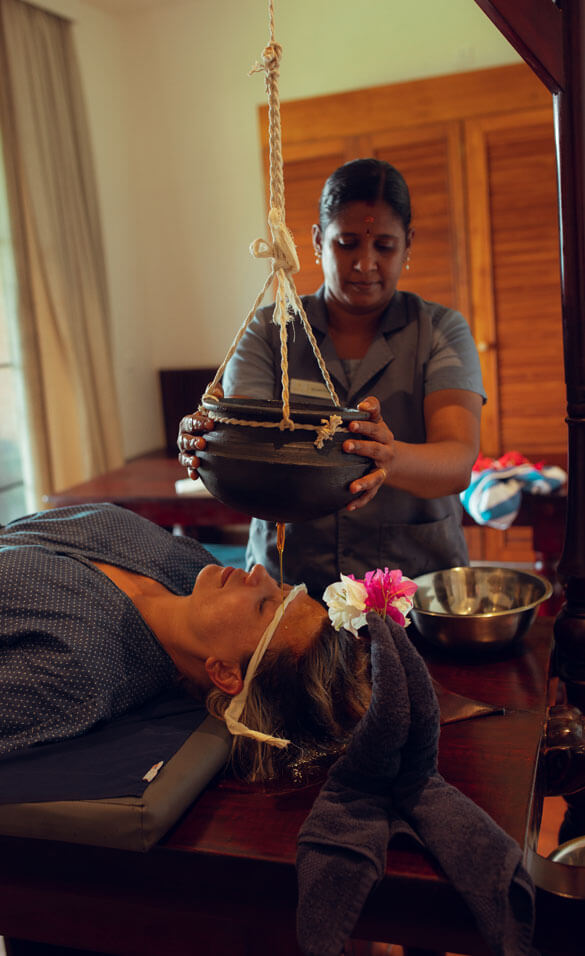
Kovalam, a coastal town in Kerala, has long been recognised as a destination for traditional Ayurvedic wellness. Among the various therapies offered here, Panchakarma stands as the most comprehensive Ayurvedic detoxification programme. At Rockholm, guests can experience authentic Panchakarma treatment in Kovalam under the supervision of qualified Ayurvedic doctors, with the Arabian Sea as a backdrop.
Panchakarma is a classical Ayurvedic cleansing system. The word translates as “five actions,” referring to a structured set of therapeutic procedures designed to remove accumulated toxins from the body.
In Ayurveda, imbalances among the three doshas — Vata, Pitta, and Kapha — are considered the root cause of many health concerns. Panchakarma works to restore this balance through a combination of internal and external therapies.
The process supports detoxification at a cellular level, addresses the digestive system, and promotes overall rejuvenation. It is one of the most time-honoured components of Ayurvedic healthcare and is traditionally administered over several days or weeks.
| Feature | Details |
|---|---|
| Treatment Type | Panchakarma Therapy |
| Medical System | Ayurveda |
| Location | Kovalam, Kerala |
| Typical Duration | 7–28 Days |
| Focus Areas | Detoxification and Rejuvenation |
| Supervision | Qualified Ayurvedic Doctors |
Panchakarma is structured across three stages, each serving a distinct purpose within the overall programme.
The preparatory phase uses oleation (internal and external oil therapies) and sudation (heat therapies) to loosen toxins and mobilise them toward the digestive tract for elimination.
This is the primary cleansing phase, during which one or more of the five classical Panchakarma procedures are administered based on the individual’s condition and constitution.
The recovery phase involves dietary guidance, lifestyle recommendations, and herbal support to help the body consolidate the benefits of treatment and gradually return to regular routines.
| Stage | Purpose |
|---|---|
| Purva Karma | Preparation |
| Pradhana Karma | Main cleansing |
| Paschat Karma | Recovery and rejuvenation |
Vamana is a medically supervised therapeutic emesis procedure. It is primarily indicated for conditions associated with excess Kapha dosha, such as respiratory concerns and certain skin conditions.
Virechana involves medicated purgation to eliminate excess Pitta from the body through the intestinal tract. It is commonly used to support liver function and address Pitta-related imbalances.
Basti refers to medicated enema therapy and is considered among the most important Panchakarma procedures. It primarily addresses Vata-related conditions and supports the colon and nervous system.
Nasya involves the administration of medicated oils or herbal preparations through the nasal passage. It is used to address conditions affecting the head, neck, and sensory organs.
Raktamokshana is a blood purification procedure. It is typically applied in specific conditions where excess Pitta or toxins in the bloodstream are identified as contributing factors. This therapy is administered selectively based on the physician’s assessment.
Panchakarma may benefit individuals dealing with stress, digestive concerns, fatigue, or lifestyle-related imbalances. It also supports those interested in preventive wellness. However, suitability depends on individual constitution and health status and must be determined through a professional Ayurvedic consultation. Panchakarma may be suitable for individuals experiencing a range of concerns, including:
Suitability varies significantly between individuals. A thorough assessment by a qualified Ayurvedic doctor is essential before beginning any Panchakarma programme.
Panchakarma is well-suited for individuals who are looking for a structured Ayurvedic approach to wellness. Those who may consider it include:
All treatment plans are personalised following an initial Ayurvedic doctor consultation. No two programmes are identical.
The duration of a Panchakarma programme depends on the individual’s health goals, body constitution, and the specific therapies recommended. There is no fixed duration suitable for everyone.
A qualified Ayurvedic doctor determines the appropriate length of treatment following an initial consultation. Common programme durations include:
| Duration | Common Purpose |
|---|---|
| 7 Days | General wellness support |
| 14 Days | Moderate cleansing |
| 21 Days | Comprehensive Panchakarma programme |
| 28 Days | Intensive Ayurvedic detox programme |
Diet and daily routine play an important role in the effectiveness of Panchakarma. Guests are typically guided to follow specific recommendations throughout the programme.
Freshly prepared, warm, and easily digestible meals
Adequate rest and reduced physical exertion
Diet and lifestyle directly influence how the body responds to Panchakarma. Warm, easily digestible meals support the cleansing process, while adequate rest and gentle practices such as yoga and meditation allow the body to integrate the effects of treatment more effectively.
Rockholm is a seaside Ayurveda resort in Kovalam offering structured Panchakarma programmes in a tranquil coastal setting. Each stay begins with a detailed Ayurvedic consultation, during which a qualified doctor assesses the guest’s health history, body constitution, and wellness goals.
Based on this assessment, a personalised treatment plan is created. This typically includes a combination of Panchakarma procedures, traditional Ayurvedic therapies, herbal formulations, and dietary guidance tailored to the individual.
Guests can also participate in daily yoga and meditation practices as part of their Ayurveda retreat in Kerala. The seaside environment at Rockholm supports a calm and focused recovery throughout the programme.
Whether you are looking for a short Panchakarma detox in Kerala or a longer Ayurvedic rejuvenation therapy, the experience at Rockholm is designed around individual care and clinical accuracy. A wellness stay in Kovalam at Rockholm integrates the natural coastal environment with the therapeutic traditions of classical Ayurveda.
It’s a full-body detox programme that combines oil massages, herbal steam baths, medicated enemas, nasal treatments, and dietary changes. Each therapy is chosen based on your body type and what needs clearing out. It sounds intense but most people find it deeply restorative rather than uncomfortable.
Yes, a 7-day programme is possible and quite common for first-timers. It won’t cover everything a full 21-day course does, but you’ll still notice real changes. Most people use the shorter version to detox, reset sleep, and see how their body responds before committing to longer treatment.
The five are Vamana (therapeutic vomiting), Virechana (herbal purgation), Basti (medicated enema), Nasya (nasal cleansing with oils), and Raktamokshana (blood purification). Not all five are done on every person. The physician picks what your body actually needs, which is usually two or three of these combined.
Genuinely, yes. Regular Panchakarma improves digestion, clears chronic fatigue, reduces joint pain, and resets your nervous system in a way that daily habits alone rarely manage. Many people who do it once make it an annual thing. The benefits tend to build over time rather than fade.
It takes time, and the detox process can leave you feeling tired or emotionally raw for a day or two mid-programme. You also need to follow strict dietary rules during treatment, which some people find difficult. It is not a quick fix. If you go in expecting a spa holiday, you will be surprised by how medically structured it actually is.
People with acute fever, active infections, severe heart conditions, or advanced cancer should avoid it. Pregnant women, the elderly in very weak health, and anyone who just had surgery need to wait. A proper physician consultation before starting is not optional. It filters out exactly these cases and keeps the treatment safe.

