




PANCHA KARMA A COMPREHENSIVE AYURVEDIC DETOXIFICATION AND REJUVENATION THERAPY | Rockholm

Dr. Akhila Remanan
Consultant Physician
Rockholm at the Light House
Beach
Panchakarma,
an integral part of Ayurveda
, is profound detoxification and
rejuvenation therapy that aims to restore the body’s natural
balance and wellbeing. Panchakarma is deeply rooted in ancient
texts like the Charaka Samhitha, which guide us in
understanding the body’s intricate balance of doshas and the
importance of maintaining the balance for optimal health.
“Yadha loke yadha dehe tadha dravyeshu karmani Thada dosha
dathu moolam sruthva shastre yathoktam” (Charaka Samhitha
Suthra Sthana 26:12) This verse reminds us that just as in the
world and the body, everything has a cause, so do imbalance in
the doshas and dhatus(tissues) have their root cause.
Panchakarma aims to eliminate these imbalances and restore
harmony of the body. The word originated from Sanskrit
language, where “Pancha” means “five” and “Karma” means
“action/procedures”. Panchakarma involves a series of
treatment procedures designed to cleanse the toxins of the
body(ama) and restore doshic balance.(Vatha, Pitha and
Kapha)
.
THE FIVE ACTIONS OF PANCHAKARMA
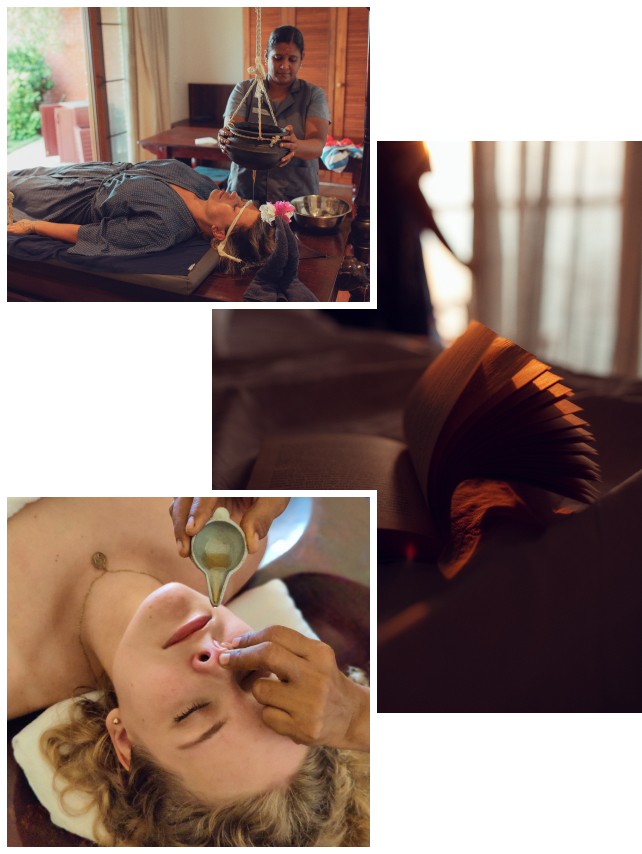
1. NASYA (Nasal Administration)
The term Nasya denotes ‘being in the nose’ or ‘belonging to nose’. It is the administration of herbal oils, powders or pastethrough nasal route especially to eliminate the accumulated Kapha and thereby cleansing and rejuvenating head and neck region.It is beneficial for treating sinusitis, migraine, facial palsy, hair problems etc. “Urdwajatru vikareshu viseshath nasyam ishyathe”
2. VAMANA (Therapeutic emesis)This is the controlled process of inducing vomiting through oral medications to eliminate the excess Kapha dosha from the upper respiratory tract and stomach. It helps in treating bronchitis, asthma, allergies etc.
faq's
Panchakarma comes from Sanskrit: “Pancha” means five and “Karma” means actions or procedures. It is a series of Ayurvedic treatments that cleanse the body of toxins (ama) and restore the balance of Vatha, Pitha and Kapha.
According to the Charaka Samhitha, the five procedures are Vamana (therapeutic emesis), Virechana (therapeutic purgation), Niruha Vasti (decoction enema), Anuvasana Vasti (oil enema) and Nasya (nasal administration of herbal oils or powders). Some texts list Raktamokshana (bloodletting) in place of one of the enemas.
Panchakarma removes accumulated toxins, restores doshic balance and rejuvenates the body and mind. Specific procedures help with particular problems, for example Nasya for sinusitis, migraine and hair problems, and Vamana for bronchitis, asthma and allergies.
Not always in the same form. An Ayurvedic doctor first checks your constitution, health and strength, then decides which procedures are right for you, how intense they should be and how long the programme should last.
At Rockholm at the Light House Beach in Kovalam, Panchakarma is planned and supervised by our Ayurveda doctors after a personal consultation, with diet and rest that support the treatment.
6 Responses