




Hatha or Vinyasa Yoga: Which Style Really Suits You?

Aishwarya S Babu

Yoga Teacher
Rockholm Resort
Hatha Yoga is generally slower, calmer and more focused on individual postures, while Vinyasa Yoga is more dynamic, flowing and closely connected to the rhythm of the breath. Both styles combine movement, breathing and mindfulness, but the pace, structure and experience can feel quite different.
If you are looking for stability, conscious alignment and relaxation, Hatha may suit you better. If you prefer continuous movement, greater intensity and a meditative flow, Vinyasa may be the better fit. For those who want to experience yoga in a peaceful, natural environment, Yoga at Rockholm offers an opportunity to explore a holistic yoga practice.
What Is Vinyasa Yoga and How Does It Work?
Vinyasa Yoga is more active and more strongly sequenced. Inhalation and exhalation are connected with specific movements, creating a flowing sequence – instead of holding each posture separately, you move from one position to the next.
This can feel light, rhythmic and almost meditative, but it can also be physically demanding. Depending on the teacher, sequence and level, a class can range from gentle to very intense. Therefore, it is worth briefly asking about the level of the class before participating.
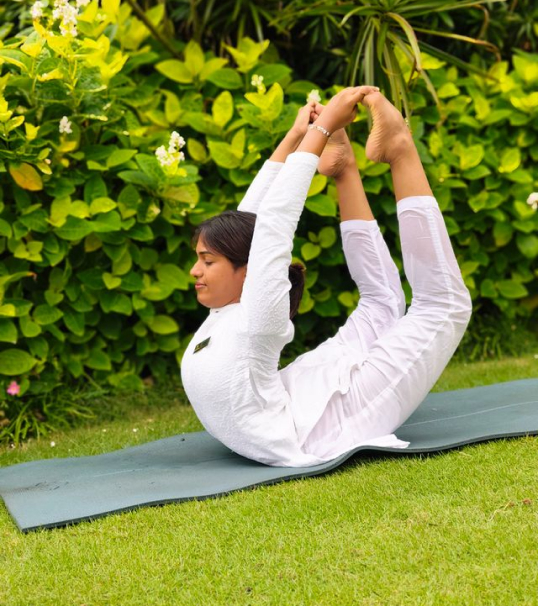
What Is Hatha Yoga and How Does It Work?
Hatha Yoga is a classical, rather slow style. The focus is on posture, breathing and inner awareness. Gentle does not mean passive: postures held for longer periods challenge the muscles, joints and concentration – simply in a calm way.
Anyone who wants to experience yoga not as a fitness programme but as a holistic practice often finds a good starting point in Hatha. The slower pace makes it easier to feel your own body, recognise your limits and become aware of breathing patterns. If you would like to learn more about the effects of individual postures, you can find further information in the article Benefits of Yoga Asanas for Mind & Body.
Hatha and Vinyasa Yoga: What’s the Difference?
Both styles belong to body-oriented yoga practice and work with asanas, conscious breathing and concentration. The difference is mainly seen in pace, structure and intensity: Hatha builds up and holds postures with calmness, while Vinyasa connects them into a flowing sequence. Both can be suitable for beginners, returning practitioners and experienced yogis – what matters is what suits your body, current condition and goals at the moment.
Practice | Typical focus | Suitable for |
Hatha Yoga | Individual postures, breath, alignment, stability | Beginners, calm practice, body awareness |
Vinyasa Yoga | Breath-led movements, flowing transitions | Dynamic practice, strength, endurance |
Hatha Flow | Gentle sequence of Hatha elements | Structure and movement together |
Hatha Vinyasa Yoga | Hatha foundation with flowing Vinyasa transitions | Balance between calmness and flow |
Hatha Power Yoga | Strength-building practice with Hatha elements | Advanced practitioners, active beginners with guidance |
What Are Hatha Asanas and Which Postures Are Practiced in it?
Hatha Asanas are the body postures practised in a Hatha session: standing postures, forward bends, gentle backbends, twists, balancing postures and restorative positions.
It is typical for these asanas to be built up with more time. You learn where your feet are placed, how the spine is aligned, how the shoulders and pelvis respond and how the breath supports the posture. This creates greater body awareness without putting you under pressure through fast sequences.
Hatha or Vinyasa: Which Is Better for Beginners?
For beginners, Hatha or Vinyasa is not necessarily an either-or question. Many people find it easier to start with Hatha because the slower pace gives them more time to truly understand the postures. However, those who naturally enjoy movement – dancing, running or functional training, for example – may also feel comfortable in a beginner-friendly Vinyasa class.
The quality of instruction is what matters. A good beginner class explains breathing, alignment, pauses and alternatives. No one should feel that they have to keep up when their body is clearly showing its limits.
If you are looking for … | … this will probably suit you |
A calm introduction to yoga | Hatha |
More body awareness and alignment | Hatha |
Flowing movement with a breathing rhythm | Vinyasa |
Gentle movement without rushing | Hatha Flow |
A mix of stability and flow | Hatha Vinyasa Yoga |
A strengthening, active practice | Hatha Power Yoga or dynamic Vinyasa |
How Do Hatha and Vinyasa Yoga Differ in Pace and Intensity?
With Hatha, the pace is usually measured: you move into a posture, settle into it, breathe for several breaths and then release it in a controlled way. This feels calm but often requires concentration and holding strength.
Vinyasa generally flows more continuously. The transitions are part of the practice, not simply the way between two postures – as a result, the heart rate can rise and the class can feel more athletic overall. Hatha Power Yoga, on the other hand, is a more vigorous variation in which Hatha elements are practised more intensely. This form can be demanding and, in the case of physical complaints, exhaustion or limited experience, should only be practised with proper guidance.
How Can Hatha and Vinyasa Yoga Support Your Body and Mind?
Both styles combine movement, breathing and awareness – and can therefore support overall wellbeing. Regular practice helps many people become more aware of tension, improve posture, deepen their breathing and regulate stress more consciously.
Yoga works not only through physical stretching. Many people experience the practice as a fixed moment in the day when they do not have to perform, but simply get to feel. This inner attitude fits well with a holistic wellness environment where relaxation, nutrition, nature and self-care work together. For a deeper connection between practice, mindfulness and relaxation, a Yoga & Meditation Retreat in Kovalam can be a good option.
Can Hatha or Vinyasa Support Detox and a Healthy Lifestyle?
Many people search for “Yoga for Detox” and usually mean something broader than a quick cleanse – rather, they are referring to a lifestyle that supports digestion, movement, sleep, breathing and mindful nutrition.
However, a well-guided practice can help gently move the body, deepen breathing, reduce feelings of sluggishness and encourage healthier routines. Combined with mindful nutrition, sufficient sleep and a peaceful environment, yoga can be a meaningful part of a healthy lifestyle.
Regenerative Yoga is particularly suitable when your body needs rest. It works with supported postures, longer holding times and conscious letting go – often a good complement to Hatha or Vinyasa, especially during periods of stress, exhaustion or intense phases of life.
Which Yoga Style Suits You?
The best choice depends on how you feel right now and what you want to build in the long term. If you are new to yoga, have injuries or are looking for inner calm, Hatha can be a better first choice. If you love movement, enjoy challenging yourself and are looking for a rhythmic flow, Vinyasa may suit you better.
There is no need to commit to one style forever. Many practitioners switch depending on their current condition – a dynamic practice in the morning and perhaps a calm Hatha sequence in the evening. In a retreat environment, the connection with breathing exercises, meditation and philosophy can also become important. Anyone who wants to understand yoga not only physically but also as a way of life can find useful insights in the article about the Niyamas in Yoga Philosophy.
Find the Yoga Practice That Suits You
Hatha or Vinyasa Yoga is not a question of right or wrong. It is an invitation to honestly feel which practice serves your body, your breath and your everyday life at this moment.
If you would like to experience yoga in a peaceful retreat atmosphere, Rockholm can be a good place to discover different approaches mindfully. Start slowly, listen to your body and choose the practice that not only moves you but also brings you inward.
faq's
Vinyasa is often perceived as more physically demanding because the practice is more flowing and dynamic. Hatha can also be challenging, especially when postures are held for longer periods.
Hatha is particularly suitable for beginners, people looking for a calm practice, those experiencing stress and anyone who wants to deepen their understanding of alignment, breathing and body awareness.
The best yoga style is the one you can practise safely, regularly and with enjoyment. For some, that is Hatha; for others, Vinyasa, Yin ,Restorative or a combination of these.
Very dynamic styles such as Ashtanga, Power Yoga or advanced Vinyasa are often considered particularly challenging. However, how difficult a class actually is always depends on the sequence, teacher and your body.
Yes, if the class is specifically designed for beginners. A good introduction explains breathing, pace, alternatives and pauses so that no one has to rush through the class.
Yin Yoga, Restorative Yoga and very gentle Hatha classes are among the calmest forms. They are well suited for relaxation, gentle mobility and regeneration.
No. Both use yoga postures and breathing, but Vinyasa connects movements more fluidly, while Hatha usually holds individual postures more consciously and for longer.
For a calm introduction, Hatha is often ideal. For more movement, Vinyasa is a better fit. If you want both, a combined practice such as Hatha Vinyasa Yoga can be a good choice.