




OUR PURPOSE
Pizhichil Treatment in Ayurveda
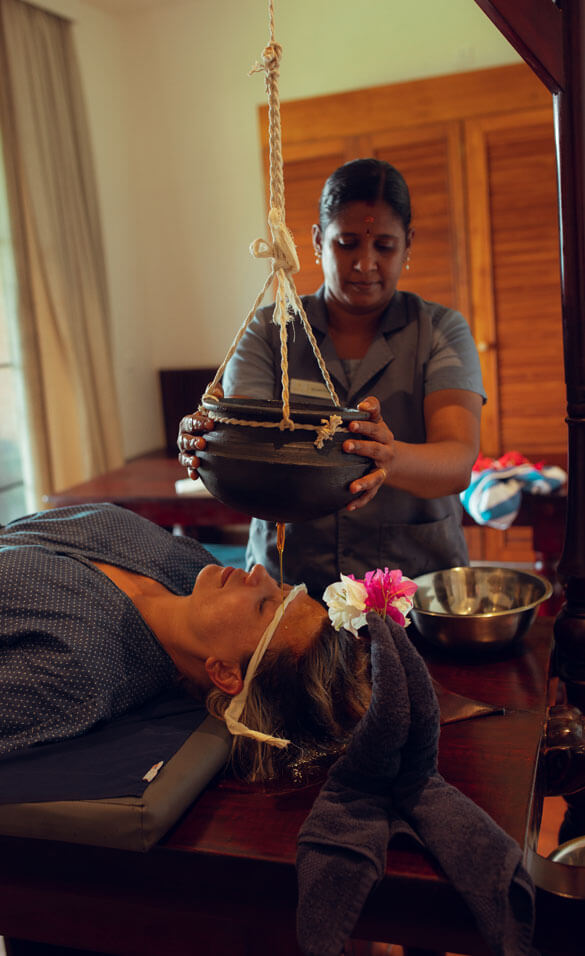
Pizhichil treatment is a classical Ayurvedic therapy in kerala which warm medicated oil is poured over the body in a continuous stream while therapists perform gentle, synchronised massage. Practised in Kerala for generations, it is traditionally used to support relaxation, joint comfort, and general wellbeing within a physician-guided programme.
What is Pizhichil in Ayurveda?
Pizhichil is a Malayalam term meaning “to squeeze,” describing how warm oil is squeezed from a cloth and poured over the body in a steady flow. It remains one of the signature treatments of Kerala Ayurveda.
The therapy belongs to the Sarvangadhara category, in which a medicated substance, here warm oil, is applied over the entire body (sarvanga) in an uninterrupted pour (dhara), setting it apart from more localised oil treatments.
Pizhichil draws on the principles of Abhyanga, the traditional oil massage, combined with the gentle warmth of Swedana, or herbal sudation therapy. Because Ayurveda treats each individual differently, a personalised consultation with a qualified physician is essential before beginning treatment.
Pizhichil Treatment Procedure
Consultation: Every session begins with a physician consultation to understand the guest’s health background before recommending a suitable oil and course length.
Oil preparation: Medicated oils are gently warmed to a comfortable temperature, prepared fresh according to classical formulations selected by the physician.
Warm oil application: The guest lies on a traditional wooden droni, and warm oil is poured over the body in a slow, continuous stream from head to toe.
Massage technique: While the oil is poured, two or more therapists massage the body using coordinated, rhythmic strokes to support circulation.
Duration: A single session typically lasts 60 to 90 minutes and is usually recommended as part of a multi-day course.
Oils Used in Pizhichil Ayurvedic Treatment
Oil selection is central to Pizhichil and is always determined by a qualified physician based on individual assessment. Commonly used oils include:
Ksheerabala Tailam, a milk-based sesame oil preparation traditionally used to support the nervous system and promote relaxation.
Dhanwantharam Tailam, a classical formulation traditionally associated with muscle and joint wellness.
Mahanarayanam Tailam, a well-known herbal oil traditionally used to support joint comfort and ease of movement.
Physicians may also recommend other herbal oil blends prepared according to classical Ayurvedic texts, depending on individual needs.
Pizhichil Benefits
According to Ayurvedic practices, Pizhichil is traditionally used to support several aspects of wellbeing, though outcomes vary and cannot be guaranteed.
Relaxation and stress management: The rhythmic pouring of warm oil combined with gentle massage may help promote a sense of calm.
Muscle and joint wellness: Pizhichil is traditionally associated with easing stiffness and supporting comfortable movement.
Skin nourishment: Sustained application of herbal oils is traditionally used to support skin softness and nourishment.
Sleep quality: Many guests report improved relaxation following Pizhichil, which may help promote better sleep as part of an overall wellness routine.
Rejuvenation: As a Rasayana-oriented therapy, Pizhichil is traditionally considered supportive of general vitality when practised under physician guidance.
Post-Treatment Care After Pizhichil
After a session, guests are typically advised to take a warm bath using herbal powders rather than soap, cleansing gently while retaining the oil’s benefit.
Rest is recommended immediately afterward, allowing the body to settle before resuming regular activity.
Herbal drinks, such as warm water infused with select herbs, are often offered to support digestion.
An Ayurvedic diet, generally light, warm, and easy to digest, is recommended throughout the course, along with guidance from the treating physician.
Who Can Consider Pizhichil Treatment?
Pizhichil is generally considered by wellness seekers looking for an authentic Ayurvedic experience, those wanting deep relaxation, and guests interested in structured rejuvenation programmes. Suitability should always be confirmed through a physician consultation beforehand.
Why Choose Kerala for Pizhichil Treatment?
Kerala is widely regarded as the home of authentic Ayurveda, with treatments typically guided by experienced practitioners trained in classical texts.
Herbal oils used across Kerala are often prepared following traditional methods, with many centres maintaining close ties to established Ayurvedic pharmacies. Combined with the region’s calm coastal surroundings, this creates a setting suited to genuine, physician-led care.
faq's
A single Pizhichil session generally lasts 60 to 90 minutes. Most Ayurvedic physicians recommend a course of several consecutive days for a fuller experience, depending on individual needs.
Pizhichil is not automatically suitable for everyone, since Ayurvedic treatments are recommended based on individual constitution and health status. A physician consultation is necessary to confirm suitability beforehand.
Abhyanga is a full-body Ayurvedic oil massage where oil is applied and worked into the skin by hand. Pizhichil goes further: warm oil is continuously poured over the body in a steady stream while therapists massage simultaneously, using a much larger quantity of oil and typically involving two or more therapists for a longer, more immersive session.
Dhara is the broader Ayurvedic term for any therapy involving a continuous pour of liquid over the body, such as Shirodhara, which targets the forehead. Pizhichil is a specific type of Dhara, classified under Sarvangadhara, where warm oil is poured over the entire body rather than a single area.
Sweda refers to sudation, or induced sweating, in Ayurveda. Pizhichil is sometimes described as a Sneha Sweda, a form of oil-based sudation, because the sustained warmth of the poured oil gently induces mild sweating alongside deep oleation, combining the benefits of Snehana (oiling) and Swedana (sweating) in one therapy.