




Naivedya at Rockholm – A Sacred Culinary Experience | Rockholm

Mr Rethish Nair
General Manager
Rockholm at the Light House
Beach
Naivedya Restaurant: Where Ayurveda, Devotion & Taste Meet
Naivedya is a Sanskrit word that
means offering to our deities or nature. so, in practice
Naivedya Means food offered as part of a worship ritual,
before eating it. The history of Naivedya offerings traces
back to ancient times, rooted in deep devotion and spiritual
practices. Naivedya meaning is “sacred food,” tradition
that involves offering freshly prepared Ayurveda food to deities as an
expression of gratitude, love, and surrendering yourself to
the spiritual deity. This practice also resonates with the principles of Ayurveda, where nourishment plays a key role in healing and wellness, as emphasized in our Ayurveda Philosophy
and Ayurveda Cuisine
.
It is believed that this practice emerged as a way to express
reverence and devotion to divine beings. Offering food to
deities was seen as a way to honour their presence and seek
their blessings. Over time, this ritual became an integral
part of religious ceremonies, festivals, and daily worship.
Naivedya offerings, also known as Prasadam, hold a profound
spiritual significance in Hindu traditions. These sacred
offerings are believed to be infused with divine blessings and
are distributed among devotees as a way to share in the
sanctity and grace.
Naivedya offerings is seen as a sacred gift from the divine,
and by distributing it, the sanctity is shared with others.
This act fosters a sense of unity, community, and goodwill, concepts also nurtured through the holistic experiences at Rockholm, such as our Daily Yoga Programs
that aim to bring balance and harmony to our guests.

It is usually considered to use
banana leaf and Tulsi leaf while offering Naivedya because it
is spiritual and scientific to offer Naivedya on banana leaf
when compared to a stalk of banana leaf, its tip has greater
ability to emit “Sattvik” waves like fountain, these
fountain-like waves help in reducing the proportion of
“Raj-tam” components in the environment around us, therefore
the stalk of the leaf should be towards the deity and the tip
should be towards us.
When Tulasi leaves are used in offering Naivedya to deity, it
reaches the deity faster again Naivedya becomes ” Sattvik” and
attacks from possible negative energy reduces, the Tulsi plant
has greater ability to attract Sattivikata from the atmosphere
and effectively emits it towards us. It also has greater
ability to attract “Krishnatattva”in the universe, therefore
by offering Tulsi leaves enriched with subtle waves to the
Deity, the Deity principle is easily able to absorb these
waves, in this way the food offered by us easily reaches the
god and also helps in pleasing the god faster. Consuming such
Naivedya helps the devotees to obtain waves of “Chaitanya”.
faq's
Naivedya is a Sanskrit word for an offering to the deities or to nature. In practice, it is freshly prepared food offered in worship, with gratitude and devotion, before it is eaten.
Once the food has been offered to the deity, it is believed to carry divine blessings. It is then shared among devotees as Prasadam, which spreads a sense of unity, community and goodwill.
Tradition holds that the tip of a banana leaf spreads positive, sattvik energy, so the stalk is placed towards the deity and the tip towards the devotee. Tulsi (holy basil) leaves are added because they are believed to make the offering even more sattvik and help it reach the deity.
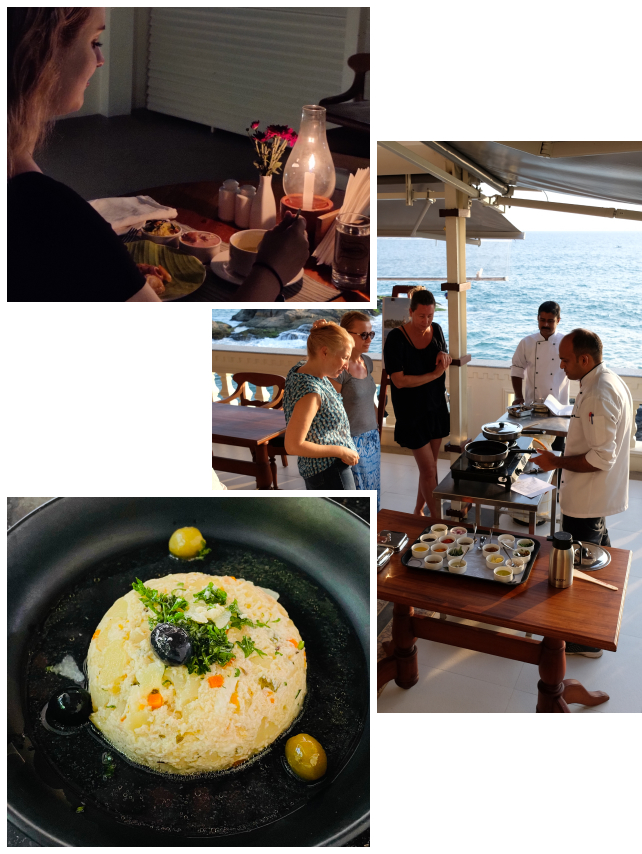
Naivedya serves fresh vegetarian cuisine prepared according to the principles of Ayurveda by our Executive Chef and his team, with dishes that suit the treatments and diet plans of our guests.
Both see food as more than fuel. In Ayurveda, fresh, wholesome food eaten with care is a key part of healing, which is the same spirit in which Naivedya is prepared and offered.